The challenge
Unit 42 had a good report but no time to share it. Palo Alto Networks' threat research division had written a 60-page 2024 Incident Response Report. It showed clients the current threats and how other organizations had responded. But the daily work of threat research kept pushing distribution down the to-do list.
Length was a problem too. Most people dealing with active threats don't have time to read 60 pages. And Unit 42 wanted a story built on safety and readiness. It didn't want the fear and doubt that's common in security marketing.
What I did
I started by reading the report for the stories inside it. My team and I went through its accounts and data, looking for narratives a busy reader could learn from quickly.
From there we turned the material into blogs, podcasts, presentations, webinars and infographics. Each piece was made for Unit 42 to share with prospective clients. The goal was content that taught readers something without leaning on the hacker-in-a-basement trope.
I planned and scheduled it all. The result was a six-month content calendar. Unit 42's marketing team didn't have to manage distribution on top of its research and communications work.
Results
One report became six months of planned, produced and scheduled content. Unit 42's marketing team could focus on daily research and on-the-ground communications while the content went out on schedule.
The project also helped Palo Alto Networks bring its messaging into line across internal divisions. That gave the brand a more consistent story to tell.
See the deliverable
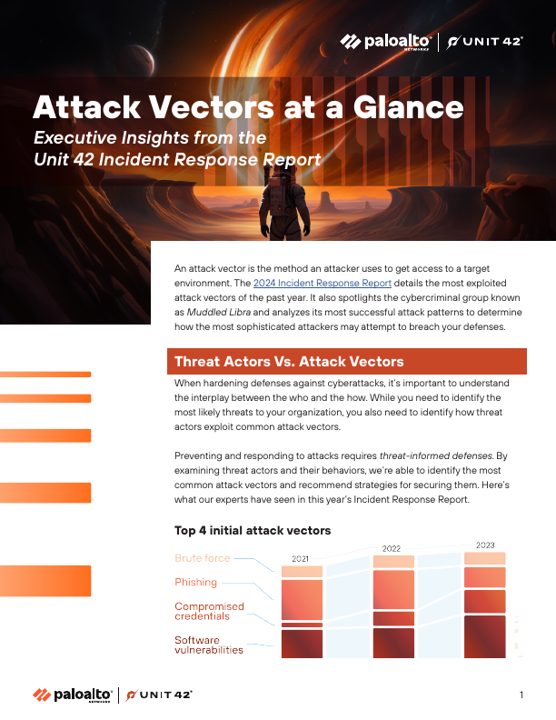
Attack Vectors at a Glance: Executive Insights from the Unit 42 Incident Response Report
A short executive brief drawn from Unit 42's 2024 Incident Response Report. It covers the most-exploited initial attack vectors, uses the Muddled Libra threat group as an example, and gives a recommendation for each vector.
Executive report · 5 pages · PDF, 1.3 MB Open the PDF